
Waterproofing & Insulation Services
Application-led protection above and below ground—from roofs and basements to wet areas, water-retaining structures, landscaped decks, and repairs.
One scope. Considered in context.
Final system selection depends on the project specification, substrate, use, and site conditions.
Roof Waterproofing & Insulation
Coordinated waterproofing and insulation for new roofs, exposed surfaces, and roof refurbishment.
Roof protection is considered as a complete build-up: substrate, falls, waterproofing, thermal insulation, and protection. New installations and refurbishment require a system selected for the roof’s use and existing condition.

Typical application areas & suitable systems
New flat roofs & combo roof systems
Systems- Specified combo roof assemblies combining compatible insulation, waterproofing, and protective layers.
- Torch-applied bituminous membranes where the substrate, roof build-up, and hot-work controls permit.
Application notesCoordinate insulation thickness, vapour control, falls, outlets, upstands, and termination details as one roof assembly.
Exposed roofs & coating systems
Systems- Polyurethane liquid waterproofing systems with the specified reinforcement and UV-resistant finish where required.
- Silicone roof coatings on sound, prepared substrates where adhesion and system compatibility are confirmed.
Application notesConfirm substrate moisture limits, adhesion, drainage, coating thickness, and suitability for exposure and maintenance traffic.
Roof refurbishment
Systems- Compatible membrane overlays or liquid-applied systems after assessment of the existing roof.
- Selective removal and replacement where the existing build-up cannot be retained.
Application notesInvestigate trapped moisture, failed interfaces, and the existing insulation before deciding whether to retain or remove layers.
Important technical considerations
- Confirm the thermal design, roof loading, access requirements, and all interfaces against the project specification.
- A coating is not a substitute for correcting defective falls, unstable substrates, or failed roof details.
Discuss roof waterproofing & insulation requirements for your project.
Request a QuotationSubstructure Waterproofing
Below-ground protection for foundations, basements, and retaining walls, coordinated with joints and groundwater conditions.
Below-ground waterproofing must respond to groundwater conditions, construction sequencing, and the concrete structure. Continuity across slabs, walls, and joints is central to the design.
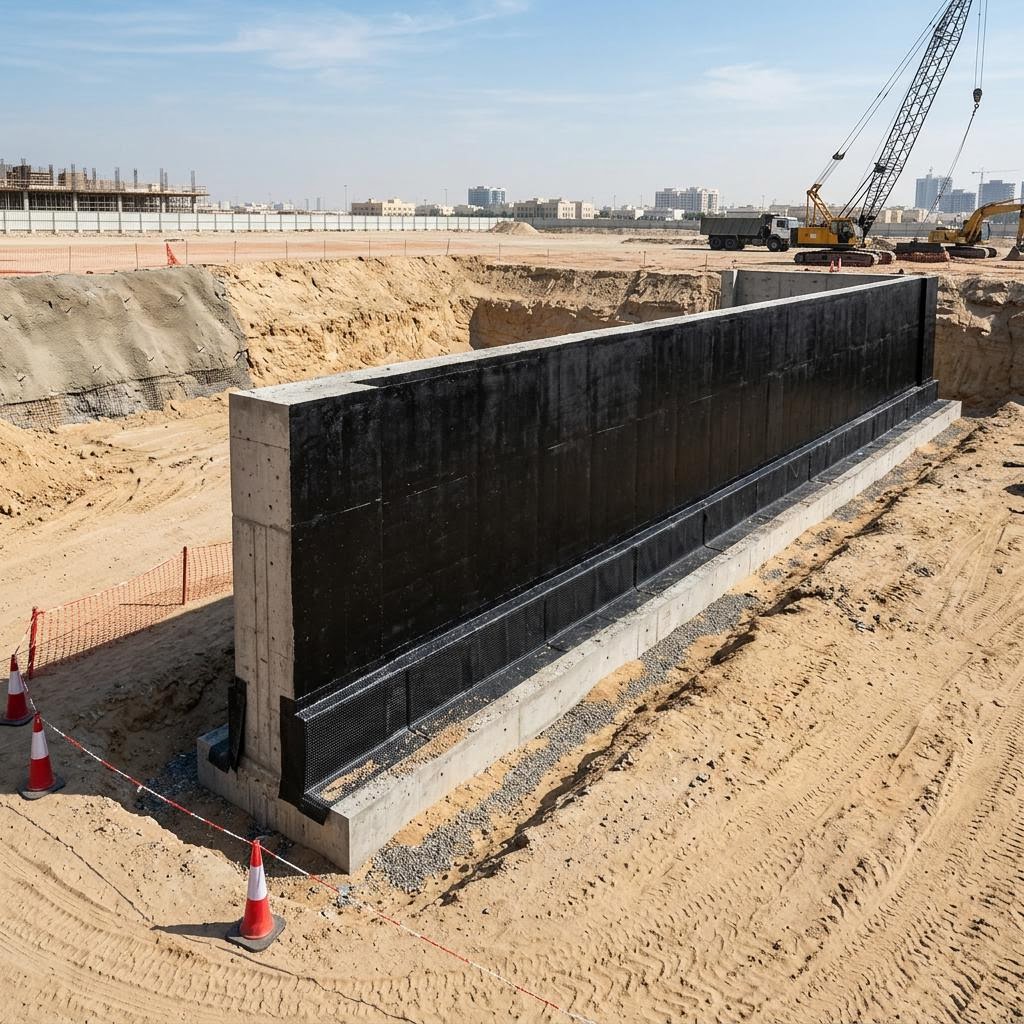
Typical application areas & suitable systems
Raft foundations & base slabs
Systems- Specified bituminous sheet or self-adhesive membrane systems on prepared blinding where suitable.
- Crystalline waterproofing for suitable concrete applications where specified, as part of the coordinated waterproofing design.
Application notesMaintain continuity at pile heads, slab edges, and service penetrations; protect membranes before reinforcement and concreting.
Basements & retaining walls
Systems- Bituminous or self-adhesive membranes selected for the substrate and anticipated below-ground exposure.
- Compatible protection boards and drainage layers where required by the design.
Application notesAssess hydrostatic pressure, substrate preparation, wall-to-raft transitions, membrane terminations, and backfill protection.
Construction joints & penetrations
Systems- Centrally cast, external, or hydrophilic waterstops selected for the joint design.
- Compatible penetration seals and joint treatment systems coordinated with the surrounding waterproofing.
Application notesWaterstop position, restraint, concrete compaction, joint movement, and installation access must be resolved before casting.
Important technical considerations
- Crystalline treatments do not eliminate the need to detail movement joints, construction joints, and penetrations.
- System selection must consider water pressure, groundwater chemistry, access, and the required protection strategy.
Discuss substructure waterproofing requirements for your project.
Request a QuotationWet Area Waterproofing
Detailed protection for bathrooms, kitchens, laundries, balconies, and terraces, compatible with adjacent finishes.
Wet area systems are selected around the substrate, expected water exposure, movement, drainage, and finish. Junctions and penetrations receive the same attention as the main surface.
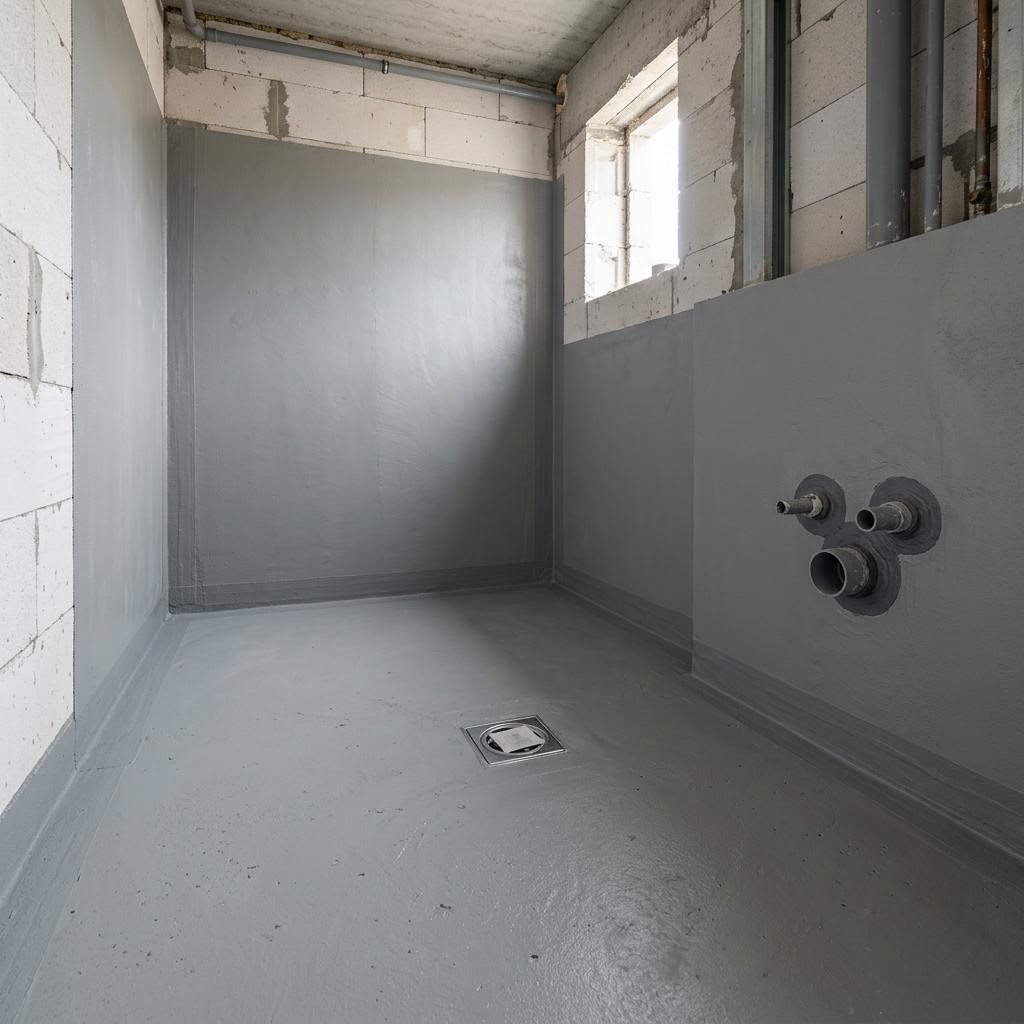
Typical application areas & suitable systems
Bathrooms & washrooms
Systems- Flexible cementitious waterproofing beneath compatible finishes.
- Selected polyurethane systems where specified and compatible with the substrate and tile build-up.
- Corner, junction, and pipe penetration reinforcement integrated with the selected system.
Application notesConfirm upstand heights, drain interfaces, curing periods, and finish compatibility before tiling or testing.
Kitchens & laundry areas
Systems- Flexible cementitious or compatible liquid-applied waterproofing selected for the exposure.
- Compatible collars, reinforcement, and seals at drains and service penetrations.
Application notesCoordinate falls, thresholds, service routes, and compatibility with floor finishes and adhesives.
Balconies & terraces
Systems- Polyurethane liquid membranes with suitable exposure or protective layers.
- Flexible cementitious systems or suitable sheet membranes where specified for the proposed build-up.
Application notesAccount for thermal movement, movement joints, drainage falls, door thresholds, outlets, and protective finishes.
Important technical considerations
- Confirm substrate condition, moisture limits, and compatibility between the membrane, adhesive, and final finish.
- Testing and covering-up should follow the specified system’s curing and inspection requirements.
Discuss wet area waterproofing requirements for your project.
Request a QuotationWater Tanks & Swimming Pools
Waterproofing and specialized lining for water-retaining structures, with careful joint and penetration detailing.
Water-retaining structures require waterproofing appropriate to the stored water, immersion conditions, structure, and finish. Lining selection is project-specific, particularly for drinking-water storage.
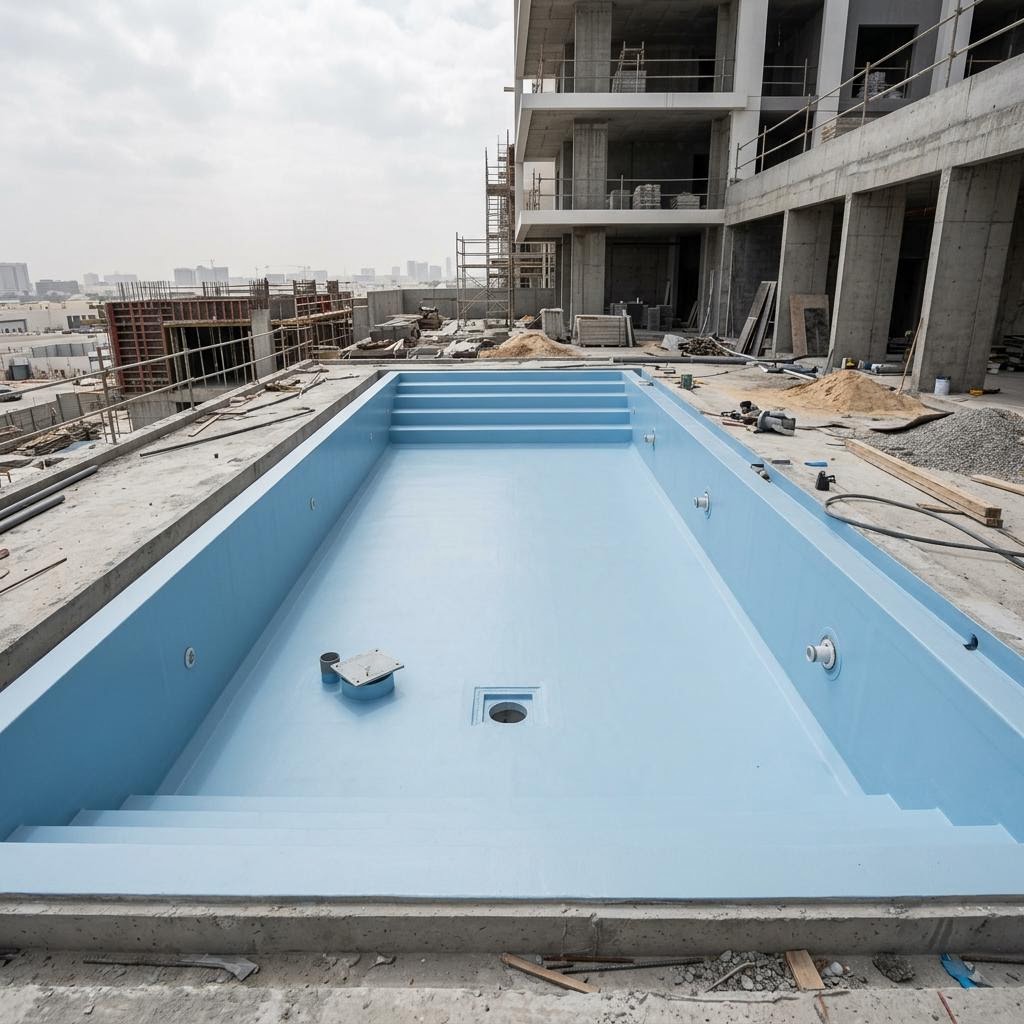
Typical application areas & suitable systems
Concrete water tanks
Systems- Cementitious waterproofing selected for the concrete substrate and intended water exposure.
- GRP lining for suitable applications, with the complete resin, reinforcement, and lining system specified for the service conditions.
Application notesFor potable water, require specific drinking-water contact certification or approval applicable to the complete proposed system; GRP is not inherently potable-water suitable.
Swimming pools & water-retaining structures
Systems- Flexible cementitious systems beneath compatible tile or other specified finishes.
- Specialized lining systems where suitable for immersion, water chemistry, and the intended finish.
Application notesCoordinate structural movement, filling and testing sequences, curing, tile adhesives, and exposure to treatment chemicals.
Joints, outlets & penetrations
Systems- Specified waterstops at construction or movement joints.
- Compatible flexible joint seals and proprietary penetration details integrated with the selected membrane or lining.
Application notesDetail changes of plane, pipe entries, fittings, and movement interfaces before the main lining is applied.
Important technical considerations
- Verify immersion suitability, stored-water chemistry, preparation, and curing requirements for the complete system.
- No potable-water suitability, certification, or project approval is implied without verification of the selected products and installation.
Discuss water tanks & swimming pools requirements for your project.
Request a QuotationPodium Decks & Landscape Waterproofing
Protected waterproofing build-ups for podiums, planter boxes, roof gardens, and landscaped areas.
Podium and landscape waterproofing must work below finishes, drainage, and planting. The membrane, root protection, drainage, and protection layers are coordinated to maintain continuity and service access.
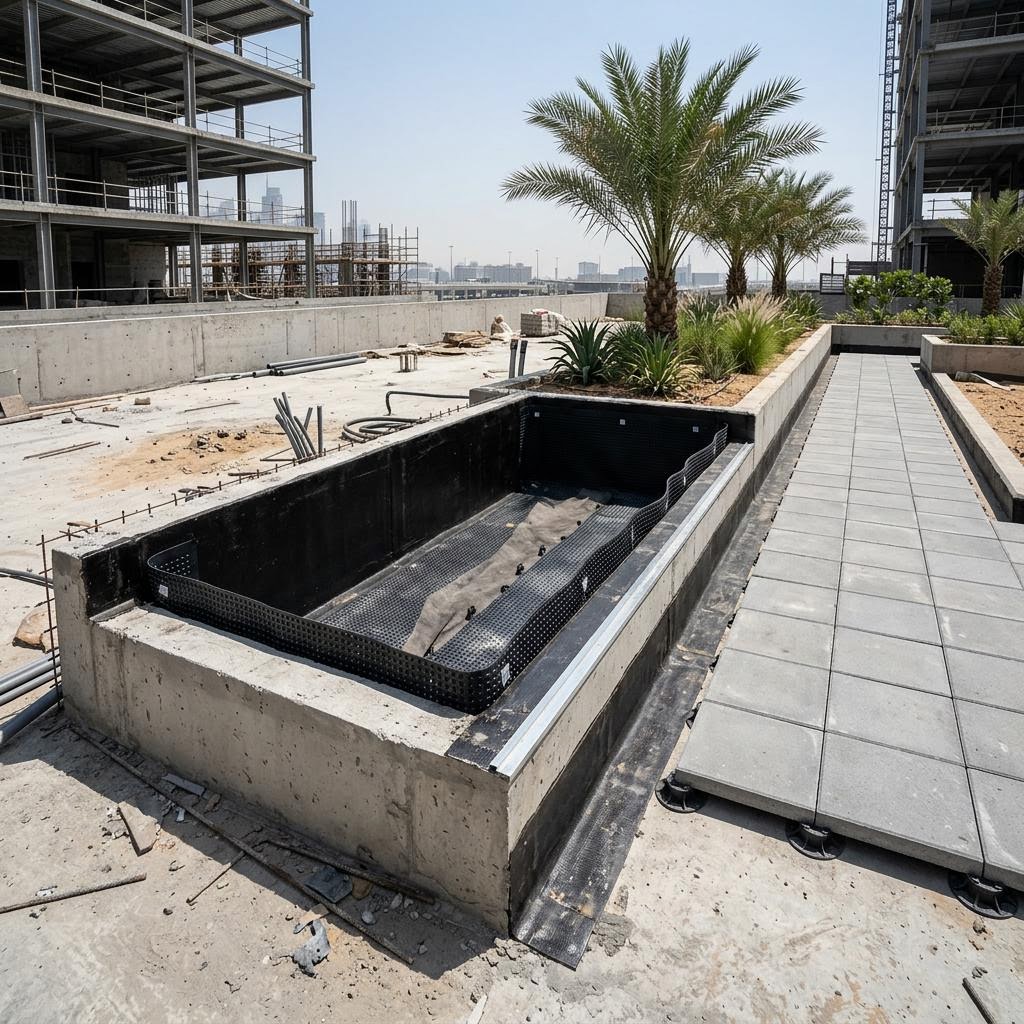
Typical application areas & suitable systems
Podium decks & paved areas
Systems- Suitable sheet membranes or reinforced liquid-applied systems specified for the deck build-up.
- Compatible protection, separation, and drainage layers beneath paving or screed.
Application notesCoordinate drainage falls, outlets, loading, movement joints, and interfaces with façades and adjacent structures.
Planter boxes
Systems- Compatible waterproofing membranes with root-resistant properties or a separate root barrier where required.
- Protective and drainage layers appropriate to the planting design.
Application notesMaintain waterproofing continuity at corners and outlets; protect the system during soil placement and subsequent landscape work.
Roof gardens & landscaped areas
Systems- Specified protected waterproofing assemblies compatible with the roof garden build-up.
- Root-resistant protection, drainage, and filtration layers where required.
Application notesConfirm structural capacity, retained-water loads, irrigation, inspection access, and compatibility of all planted-roof layers.
Important technical considerations
- Root resistance must be verified for the proposed membrane or barrier; it is not a property of every waterproofing membrane.
- Inspect and test as specified before covering the membrane with protection, finishes, or landscaping.
Discuss podium decks & landscape waterproofing requirements for your project.
Request a QuotationWaterproofing Repairs & Rehabilitation
Condition-led leak repairs, joint and crack treatment, roof recoating, and membrane restoration.
Repair planning starts with identifying the source and extent of water ingress. The repair method should address the cause and connect reliably to the existing waterproofing rather than simply conceal the visible leak.

Typical application areas & suitable systems
Roof leakage & membrane rehabilitation
Systems- Compatible membrane patches, replacement details, or overlays after assessment of the existing system.
- Silicone roof recoating on suitable sound substrates following preparation and adhesion checks.
Application notesTrace the water path and assess drainage, terminations, trapped moisture, and insulation condition before selecting a repair.
Expansion joints & crack treatment
Systems- Flexible joint repair systems or compatible replacement seals selected for the expected movement.
- Appropriate injection, sealing, or reinforcement methods selected after assessing crack type, movement, and water conditions.
Application notesDistinguish active from dormant cracks and water-bearing from dry defects; structural concerns require review by the responsible engineer.
Localized waterproofing restoration
Systems- Compatible liquid-applied or sheet membrane restoration integrated with sound existing waterproofing.
- Renewed reinforcement and penetration or termination details where deterioration is identified.
Application notesConfirm adhesion, overlap, curing, and material compatibility; widespread failure may require a wider rehabilitation scope.
Important technical considerations
- A local repair may not resolve water ingress arising elsewhere in the structure or roof build-up.
- Define investigation, access, preparation, and inspection requirements before agreeing the repair scope.
Discuss waterproofing repairs & rehabilitation requirements for your project.
Request a QuotationProject-specific review matters. Suitability, detailing, and installation requirements should be confirmed against the applicable project documents and site conditions.
Tell us what your project needs.
Share your requirements for an initial quotation enquiry.